
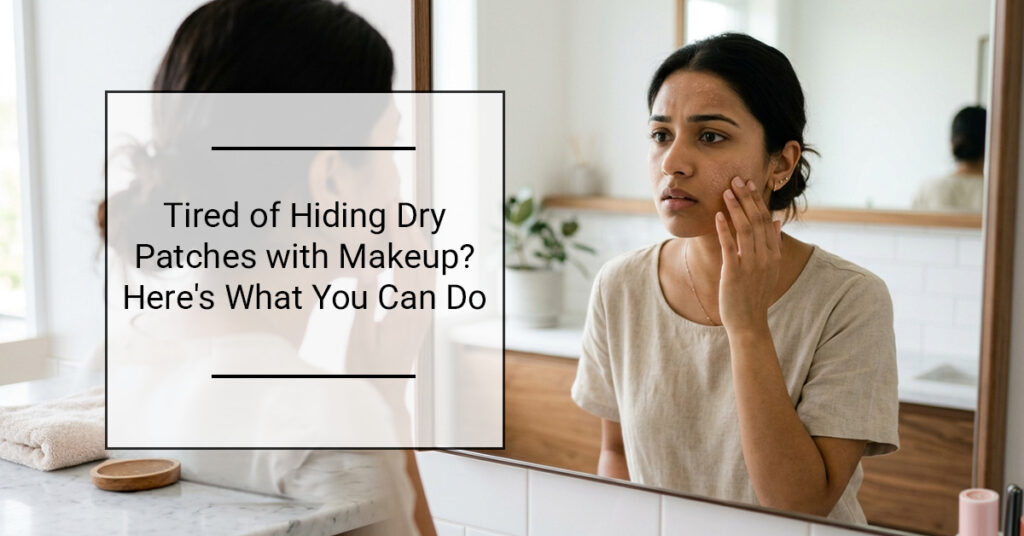
You layer on the foundation, blend it carefully, and within a couple of hours the dry patches are showing through again, flaky, uneven, and impossible to ignore. Dry patches on the face affect people across all skin types, not just those with naturally dry skin. Understanding the causes of dry patches on cheeks and other areas is the first step toward actually fixing the problem rather than covering it up each morning. If you have been dealing with this for a while and home remedies are not cutting it, a consultation with a Dermatologist Specialist in Chennai can make a significant difference in getting to the root cause.
Why Dry Patches Appear in the First Place
Dry patches do not always mean you have dry skin. That distinction matters more than most people realise.
The skin’s surface moisture depends on two things working together: the production of natural oils (sebum) and the integrity of the skin barrier. When either of these is disrupted, patches of dryness can appear even on skin that is otherwise normal or oily. Several things can trigger this:
- Over-cleansing or harsh cleansers that strip the skin’s natural oils, leaving certain areas more vulnerable than others
- Weather and humidity changes that affect how much moisture the skin retains through the day
- Prolonged sun exposure that damages the skin barrier, particularly on the cheeks and around the nose
- Certain skincare ingredients used incorrectly, retinoids, exfoliating acids, and even some vitamin C formulations can cause localised dryness when introduced too quickly
- Underlying skin conditions such as eczema, seborrhoeic dermatitis, or contact dermatitis that present as dry, sometimes scaly patches in specific areas
- Dehydration and diet, low water intake and certain nutritional deficiencies can affect skin moisture levels over time
Knowing which of these is responsible for your patches changes the treatment approach entirely, which is why a professional assessment is often more useful than cycling through products at home.
White Dry Patches on Face: When It Is More Than Just Dryness
Most people assume all dry patches are the same thing. They are not. White dry patches on face skin specifically can indicate a few different conditions, some of which need targeted treatment rather than just a richer moisturiser.
Pityriasis alba is a common and often overlooked cause: a mild inflammatory skin condition that leaves lighter, slightly scaly patches, usually on the cheeks, more visible in people with medium to deeper skin tones. It is frequently mistaken for pigmentation loss or fungal infection.
Seborrhoeic dermatitis can also produce whitish, flaky patches, typically around the nose, eyebrows, and hairline, sometimes extending to the cheeks. It tends to flare with stress, seasonal changes, and certain skincare products.
Fungal infections, particularly tinea versicolor, can cause pale, dry-looking patches that do not respond to standard moisturisers because moisture is not the issue, the underlying fungal presence is.
If your patches are persistently white, have defined borders, or do not improve with regular moisturising, getting them properly diagnosed before treating them is important. Applying the wrong product to a fungal patch or a dermatitis flare can make things worse rather than better.
How to Treat Dry Patches on Oily Skin
This combination trips people up more than almost any other skin concern. How to treat dry patches on oily skin is genuinely different from treating dryness on a naturally dry skin type, and getting the approach wrong tends to make both problems worse.
The instinct for oily skin is to use lightweight, mattifying, or gel-based products. But those same products often lack the occlusive or emollient ingredients that dry patches actually need. The result is a skin surface that is oily in some areas and still flaky in others: the classic combination skin experience that no single product seems to solve.
What tends to work better:
- Targeted application rather than full-face treatment. Use a richer, barrier-repairing product specifically on the dry patches rather than switching your entire routine. A ceramide-based cream applied only to the affected areas does not have to conflict with a lighter moisturiser used elsewhere
- Gentle, non-stripping cleansers. Foaming cleansers and those with high alcohol content are often the hidden cause of dry patches in oily skin types. A mild, low-pH cleanser preserves the barrier without leaving a greasy film
- Hydration versus oil. Dry patches on oily skin are often a hydration deficit rather than an oil deficit. Hyaluronic acid serums add water to the skin without adding oil, which helps address the dryness without worsening the oiliness
- Avoiding over-exfoliation. Oily skin types often exfoliate more than is helpful, compromising the barrier in localised areas and creating the very patches they are trying to prevent
- SPF, consistently. Sun damage is a common cause of localised cheek patches, and daily broad-spectrum SPF does more preventive work than most people expect
Approaching how to treat dry patches on oily skin this way, tends to get better results than any single product switch.
The Makeup Problem, and Why It Matters Clinically
Reaching for more coverage when patches appear is understandable, but it can compound the problem. Heavy foundations and setting powders applied over a compromised skin barrier sit in cracks rather than blending smoothly, and can introduce irritating ingredients onto already-sensitised skin. If the patch has an underlying cause like contact dermatitis or a mild seborrhoeic flare, continued makeup application over it slows healing. Switching to lighter, breathable formulas and giving affected areas some product-free time is often the most effective short-term approach while the barrier recovers.
Causes of Dry Patches on Cheeks Specifically
The cheeks are one of the most commonly affected areas, and there are a few reasons for that. The skin on the cheeks tends to be thinner than on the forehead or nose, has fewer sebaceous glands, and is more directly exposed to environmental factors like wind, sun, and cold air.
The causes of dry patches on cheeks that come up most often in clinical settings include:
- Barrier damage from over-application of active ingredients (particularly retinoids applied too close to the cheekbone area)
- Allergic contact dermatitis from fragrance in skincare or makeup products
- Atopic dermatitis with cheek involvement, which is more common than many adults realise
- Rosacea, which can present with dry, sensitive, and sometimes flaking patches before the characteristic redness becomes obvious
Cheek patches that are recurring, that spread, or that are accompanied by sensitivity or redness are worth having assessed rather than self-treating. Similarly, white dry patches on face skin that return after treatment or appear in new areas should be evaluated rather than assumed to be simple dryness.
When to See a Dermatologist
Home care manages mild, situational dryness reasonably well. But if your patches have persisted for more than a few weeks, are spreading, come with itching or redness, or are not responding to standard moisturisers, a clinical assessment will give you clearer answers than any amount of product-switching. A dermatologist can tell the difference between barrier damage, an underlying condition, and a reaction to something in your current routine.
For anyone on the ECR or OMR belt in Chennai dealing with persistent skin concerns, consulting a Dermatologist in OMR is a practical first step toward skin that does not need to be hidden at all.