
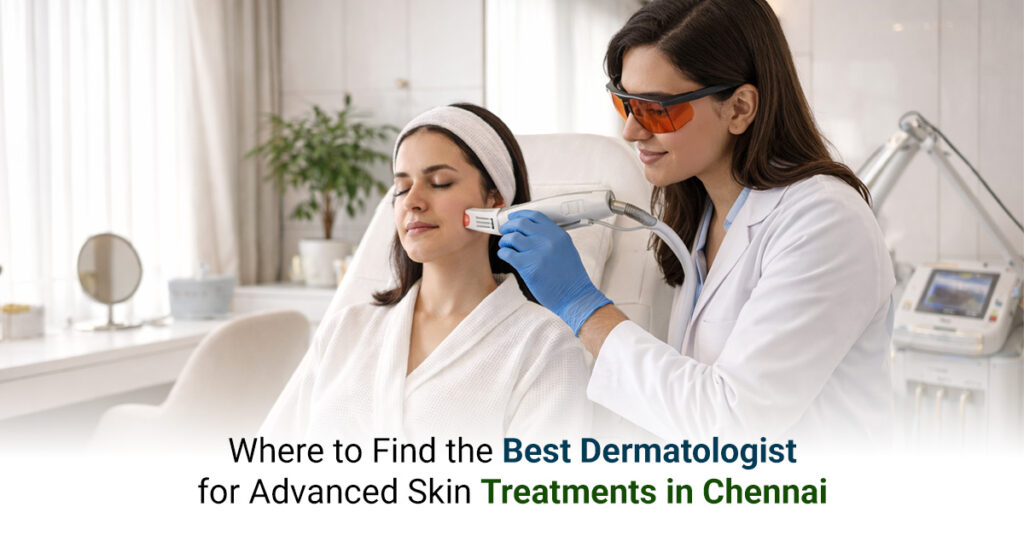
Navigating the landscape of medical aesthetics in a city as geographically vast as Chennai often feels like a gamble between generic beauty parlors and high-end clinical centers. Most patients start their journey by searching for a Dermatologist in OMR or surrounding hubs, hoping for proximity without sacrificing medical rigor. However, the “best” clinic isn’t defined by its lobby or its social media presence; it’s defined by the diagnostic depth of the skin specialist behind the desk. At Akshaya Skin Clinic, we treat the skin and scalp as biological systems under constant environmental stress, requiring more than just off-the-shelf solutions or standardized treatment packages.
The Problem with “Generic” Dermatological Care
Standard dermatological visits in many urban centers often last ten minutes: a quick glance, a prescription for a steroid cream, and a generic face wash recommendation. This approach fails because skin conditions in a coastal climate like ours are rarely “standard.” The heat, the high mineral density in the local water supply, and the urban pollution create a complex layer of pathology that a quick visual check can’t fully decipher. Whether you are looking for an acne treatment specialist or someone to manage chronic inflammation, you need a physician who investigates why your skin is reacting, not just how to mask the reaction.
Reliance on over-the-counter “solutions” usually leads to a cycle of temporary clearing followed by aggressive rebound flare-ups. This happens because most commercial products address the symptom, such as the visible pimple or the dry patch, while the underlying pathology remains unaddressed. We often see patients who have damaged their skin barrier through “product hopping,” leaving them with hypersensitivity that makes medical treatment even more challenging. Professional care is about breaking this cycle by stabilizing the skin before introducing active correction.
The Biology of Acne Management in the Tropics
Acne in Chennai is rarely a simple rite of passage. For many adults, it is a chronic inflammatory struggle that persists into their forties, often exacerbated by “product hopping” that leaves the skin barrier sensitive and prone to scarring. The diagnostic gap here is huge. We look at sebum quality, not just breakouts. In 80% humidity, sebum oxidizes into a thick paste that plugs pores, often manifesting as fungal folliculitis rather than bacterial acne. Using standard benzoyl peroxide on this can destroy the healthy microbiome and worsen inflammation.
A qualified acne treatment specialist must manage follicular hyperkeratosis. Our clinical protocols use specific salicylic and mandelic acid combinations alongside targeted lasers to alter sebaceous behavior. We aren’t just clearing visible spots. We are recalibrating the pore to prevent future blockage. For South Asian skin, post-inflammatory hyperpigmentation (PIH) is a predictable complication. We use aggressive anti-inflammatory protocols to keep melanocytes in a quiescent state. This ensures that when the active acne clears, you aren’t left with the persistent dermal staining that usually signals a failed or incomplete treatment cycle.
Reversing Pigmentation in a Tropical Climate
Pigmentation in our region is deep-seated and stubborn. A pigmentation treatment clinic must understand the unique, aggressive behavior of melanocytes in South Asian skin types (Fitzpatrick IV-VI). The UV index in Chennai is consistently high, even on overcast monsoon days, meaning your skin is under a constant “melanocyte-stimulating” signal from the moment you step outside.
Many patients arrive after using brightening creams that contain harsh steroids or hydroquinone in unregulated concentrations. These “quick fixes” actually thin the skin, leading to a condition called ochronosis, a permanent, bluish-black discoloration, or severe rebound darkening. The skin becomes thin, the capillaries become visible, and the pigmentation moves deeper into the dermis. This is a consequence of treating skin like a surface to be bleached rather than an organ to be healed.
Our clinical protocols focus on safety and depth. We use Q-Switched lasers and chemical resurfacing designed to shatter pigment without causing thermal damage to the surrounding tissue. If the laser is too hot, the skin will produce more pigment as a defense mechanism. The goal is a medical recalibration of your skin’s pigment-producing cells. This isn’t a “glow facial” you get at a spa. It is a controlled, medical intervention that targets the melanin clusters sitting deep within the dermis.
The psychological impact of uneven skin tone is real. It affects how you present yourself in professional and social settings. Relying on surface-level facials is a waste of resources for medical-grade pigmentation because they cannot reach the papillary dermis, the layer where stubborn pigment resides.
The Reality of Modern Hair Restoration
If you are searching for hair loss treatment, you’ve likely encountered a sea of “miracle” oils and “DHT-blocking” shampoos. They don’t work because they don’t reach the bulb of the hair. Your hair doesn’t need “nourishment” on the shaft; it needs a blood supply and growth signals at the root, which sits several millimeters beneath the scalp surface.
Follicle miniaturization is the silent killer of hair density. It is the process where a healthy, thick hair becomes a “vellus” hair, fine, translucent, and eventually non-existent, before the follicle dies and the scalp scars over. By the time you notice visible thinning in the mirror, you may have already lost 30% to 50% of your density in that area. Once the follicle opening closes, no medicine in the world can reopen it.
Regenerative medicine has changed the prognosis for hair loss. At Akshaya Skin Clinic, we use GFC (Growth Factor Concentrate) and Exosome therapy. This is biotechnology, not a cosmetic ritual. GFC involves extracting growth factors from your own blood, concentrating them, and delivering them directly to the “bulge” area of the follicle where stem cells reside. Exosomes, in particular, act as potent messengers that can wake up follicles that have entered a prolonged dormant state due to stress, nutritional gaps, or genetic signaling.
A skin specialist is better equipped to handle hair loss than a technician because scalp health is an extension of dermatological health. Issues like seborrheic dermatitis, clinical dandruff, or scalp calcification from Chennai’s hard water must be resolved before any growth therapy can succeed. If the “soil” of the scalp is inflamed, the “seed” of the follicle will never take root.
The Akshaya Approach: Diagnostic-First Care
We don’t believe in the “one-size-fits-all” model. Marketing packages that promise “glow” or “permanent hair growth” in three sessions often ignore the patient’s biological reality. Every plan at our clinic starts with a clinical assessment that goes beyond the skin surface. We look at your lifestyle, the mineral content of your domestic water supply, and your hormonal profile.
If your hair loss is caused by a ferritin deficiency, no amount of GFC will fix it permanently. If your acne is hormonal, a laser will only provide a temporary reprieve. We identify these triggers first. Evidence-based results are our only metric of success. We track progress through clinical photography and dermoscopic follow-ups. We aren’t looking for a temporary brighten-up; we want to see the density return to the scalp and the skin texture stabilize into a healthy, resilient state that can withstand the city’s harsh environment.
Conclusion: Making an Informed Choice
Distance should not be the primary factor in medical care. Whether you are consulting a Dermatologist in Sholinganallur or visiting us from another part of the city, your priority should be the diagnostic depth of the plan. Glossy advertisements and influencer endorsements don’t fix miniaturized follicles or chronic pigmentation; medical protocols do.
At Akshaya Skin Clinic, we focus on biological recovery rather than cosmetic camouflage. If you have been treating your skin as a surface to be polished, it is time to start treating it as an organ that needs medical regulation. Our specialist-led approach ensures that every intervention is mapped to your specific triggers, from the water in your taps to the chemistry of your sebum.