
A stressful few months at work, a family crisis, or a prolonged illness passes, and weeks later, clumps of hair start showing up on the pillow, in the shower drain, tangled in a hairbrush that never used to hold this much. The timing confuses most people, since the shedding often begins after the stressful period has already eased, not during it. This delayed connection is exactly why so many people searching for a dermatologist specialist in Chennai are surprised to learn their hair loss traces back to something that happened months earlier.
This blog explains how stress actually causes hair to fall out, whether it grows back on its own, and the treatments dermatologists use to speed up and support that recovery.
How Stress Actually Triggers Hair Loss
Hair grows in cycles, an active growth phase lasting years, followed by a resting phase, and finally a shedding phase before the cycle starts again. Under normal conditions, only a small percentage of hair sits in the shedding phase at any given time, which is why daily hair loss usually stays unnoticeable.
Significant physical or emotional stress can push a disproportionately large number of hair follicles into that resting and shedding phase simultaneously, a condition dermatologists call telogen effluvium. Because hair takes roughly two to three months to move through this cycle, the shedding often becomes noticeable well after the stressful event itself has passed, which is exactly why the delayed timing confuses so many patients trying to connect the dots on their own.
Does Stress-Related Hair Loss Grow Back on Its Own?
In many cases, yes, once the underlying stress resolves and the body’s systems stabilise, affected follicles generally resume their normal growth cycle without intervention. This is reassuring for a condition that can feel alarming in the moment.
That said, recovery isn’t guaranteed to happen quickly, and it isn’t universal either. A few factors affect whether hair grows back on its own, and how fast:
- Whether the underlying stressor has actually been resolved or is still ongoing
- Overall nutritional status, since deficiencies often compound stress-related shedding
- Age and baseline hair density, which affect how visible regrowth appears
- Whether an underlying hormonal or thyroid issue is also contributing alongside stress
For people who want to actively support and accelerate this recovery, rather than simply waiting it out, several dermatologist-recommended treatments can meaningfully shorten the timeline.
PRP: Supporting Follicles Already in Recovery Mode
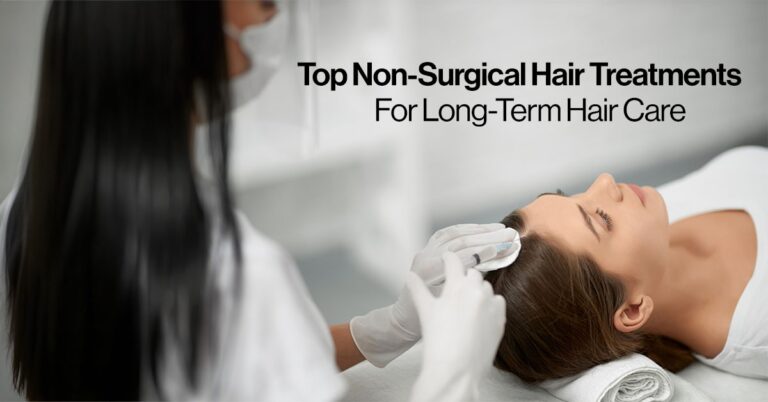
Platelet-rich plasma treatment works by concentrating growth factors from a patient’s own blood and injecting them directly into the scalp. For stress-related hair loss specifically, PRP helps follicles that are already trying to get back into their active growth phase, giving them extra help to do so more effectively and consistently.
This tends to work particularly well for stress-related shedding because the follicles themselves usually remain structurally intact, unlike more advanced pattern baldness where follicles may have already miniaturised significantly. PRP essentially reinforces a recovery process the body has already started, rather than trying to reverse permanent follicle damage.
GFC: A Concentrated Growth Factor Approach
Growth Factor Concentrate, GFC, takes a related approach to PRP but isolates a more concentrated, specific combination of growth factors rather than using the full range present in platelet-rich plasma. GFC can provide a more focused stimulus for follicles that need help getting back into their normal growth rhythm for stress-related hair loss.
Depending on the exact pattern and severity of shedding seen at consultation, dermatologists sometimes prefer GFC to standard PRP, as the concentration and delivery are slightly different in the two approaches.
Erbium Glass Laser: Stimulating Circulation at the Follicle Level
Low-level laser therapy in erbium glass wavelengths works on an entirely different mechanism, stimulating blood circulation and cellular activity at the follicle level without injections or downtime. Better blood circulation sends more oxygen and nutrients directly to your hair follicles and helps to fix the cell damage from stress-induced hair loss.
This approach has proved to be a good alternative, more conservative and less invasive, particularly for those who are reluctant to seek injection therapies or who want to incorporate several methods together for a more well-rounded course of recovery.
Exosomes: A New Frontier in Hair Regeneration Treatment
Exosomes are minute vesicles which facilitate cellular communication through the transmission of proteins and genetic material to influence behavior of nearby cells such as hair follicles. Exosome therapy, in combination with hair restoration, utilizes topical signaling molecules on the scalp to initiate regenerative signaling and to stimulate the natural regeneration of hair follicles.
This is a newer addition to the stress-related hair loss treatment toolkit compared to PRP, and dermatologists position it as a complementary therapy, often combined with other treatments, rather than a standalone solution for most patients.
Microneedling With Hair Peptides
Microneedling with Hair Peptides Microneedling works by creating micro-injuries on the scalp, which in turn causes your body to respond with a natural wound healing response including increased collagen production and improved absorption of whatever topical treatment you apply immediately after. When combined with hair peptides (like copper tripeptide), it synergizes the mechanical stimulation of microneedling with focused topical actives designed specifically to support follicle health.
This combo can be beneficial for stress related shedding and helping scalp circulation and the follicle environment, in addition to more targeted treatments such as PRP or GFC as part of a more complete treatment approach.
Why Addressing the Underlying Stress Still Matters Most
These treatments don’t work in isolation from the underlying cause. If ongoing, unmanaged stress continues pushing follicles into premature shedding, even the most effective treatment plan will struggle to outpace that continued trigger. Dermatologists emphasise that treatment works best alongside, not instead of, addressing whatever stress or lifestyle factors originally triggered the shedding.
A few supporting factors dermatologists often review alongside treatment:
- Sleep quality and consistency, since poor sleep compounds physiological stress on the body
- Nutritional intake, particularly protein, iron, and vitamin D levels
- Any recent illness, surgery, or significant life event that may still be resolving
- Thyroid function, since thyroid imbalances can mimic or worsen stress-related shedding
Building a Treatment Plan That Fits the Actual Cause
Stress-related hair loss doesn’t respond to a single fixed protocol applied the same way to everyone. A dermatologist will start by confirming the diagnosis, ruling out other causes like hormonal imbalance or nutritional deficiency and then suggest a combination suitable for the severity and shedding pattern observed.
At Akshaya Skin Clinic, every hair loss evaluation begins with understanding what’s actually driving the shedding before recommending treatment, since stress-related hair loss, hormonal pattern loss, and nutritional deficiencies can present similarly but require entirely different approaches to treat effectively. That diagnostic step matters considerably, since starting the wrong treatment wastes both time and money while the underlying cause continues unaddressed.
Getting Hair Growth Back on Track
Stress-related hair loss often does resolve on its own once the underlying trigger passes, but for many people, that recovery happens slowly enough to feel discouraging without support. PRP, GFC, erbium glass laser therapy, exosomes, and microneedling with hair peptides each offer a different way to actively support follicles already attempting to recover, often working best in combination rather than as standalone treatments.
For anyone dealing with this kind of shedding, exploring proper hair treatment in Chennai options backed by a clear diagnosis is a far more reliable path forward than waiting and hoping the shedding resolves entirely on its own.