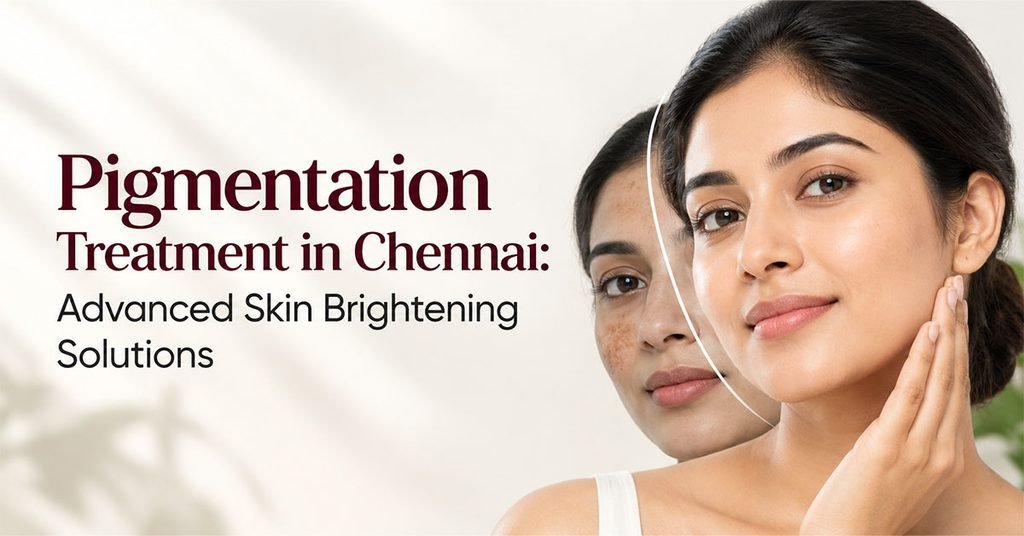
Pigmentation in Indian skin has more than one cause, and it seldom clears with a single product or procedure. At Aesthetics Skin & Hair Care Clinic, we treat melasma, sun spots, post-acne marks and uneven tone through a diagnosis-first approach at our Cosmetology Clinic in Chennai. This blog explains the treatments we use: Q-switched laser, superficial, medium-depth and deep chemical peels, exosome treatments, IV glutathione injections, and skin-brightening serum infusion with kojic acid, arbutin and Vitamin C. It also covers HydraFacial combined with a chemical peel or microneedling, and the Cosmelan and Dermamelan programs. Each option suits a different depth and type of pigment, so your skin tone, medical history and the cause of the darkening decide the plan. Daily sun protection determines whether results last. The sections below describe how each treatment works, who it suits and what recovery involves.
How We Diagnose Pigmentation Before Choosing a Treatment
Pigment sits at different depths of the skin, and that depth determines which treatment works. Epidermal pigment, such as sun spots and post-acne marks, responds faster. Dermal pigment responds slowly and sometimes only in part. Melasma often involves both layers, and heat, hormones and visible light keep triggering it.
We examine your skin under magnification and review your medications, hormonal history, sun exposure and previous treatments. Many patients arrive after months of fairness creams that contain steroids, which thin the skin and complicate any procedure. We stop those first.
Most patients in Chennai have Fitzpatrick type IV to VI skin, which produces pigment readily after any inflammation. An aggressive setting can darken the area it was meant to clear, so our protocols begin conservatively and increase only when your skin responds well.
Q-Switched Laser Treatment for Stubborn Pigment
Q-switched lasers deliver extremely short pulses that break pigment into fragments, and your body clears those fragments over the following weeks. We use this treatment for sun spots, freckles, age spots and Nevus of Ota. Low-fluence laser toning, repeated over a series of sessions, treats diffuse darkening on the face.
Melasma needs more caution. High energy can trigger rebound pigmentation, so we use low settings, space the sessions two to four weeks apart and pair the laser with topical therapy.
Chemical Peels: Superficial, Medium-Depth and Deep
A chemical peel removes damaged skin in a controlled way. The acid and the depth depend on where your pigment sits.
Superficial Peels
Glycolic, salicylic, lactic and mandelic acid peels act on the epidermis. They treat mild tanning, post-acne marks and dull tone with little downtime. Light flaking usually settles within three days, and a series of four to six sessions gives the most even result.
Medium-Depth Peels
Trichloroacetic acid (TCA) peels reach the upper dermis. We use them for deeper sun damage and resistant marks in carefully selected patients. Redness and peeling last about a week, and strict sun avoidance during that period protects the result.
Deep Peels
Phenol-based deep peels reach the lower dermis and carry the highest risk of pigment change, scarring and systemic effects. We reserve them for severe photodamage in suitable patients and seldom recommend them for darker skin types.
Exosome Treatments, IV Glutathione Injections and Serum Infusion
Exosome Treatments
We apply exosomes right after microneedling or fractional laser, while the micro-channels are open and the skin absorbs the product best. Inflammation turns a minor procedure into new dark marks on Indian skin, so the aim is less redness and a smoother recovery. The published studies are small and mostly look at healing and texture, so we add exosomes to a brightening plan and leave the pigment itself to peels, laser and topical actives.
IV Glutathione Injections
Many patients ask for glutathione expecting overall whitening, so we begin with a different question: why is your skin dark? Glutathione lowers melanin production in some people, but the trials on intravenous use for skin tone are few and short. We prescribe it only after a medical assessment that covers your liver and kidney history, your current medicines and what you expect from the course.
Skin-Brightening Serum Infusion
This treatment delivers active serums into the skin during a facial procedure. The actives we use include:
- Kojic acid inhibits tyrosinase, the enzyme required for melanin formation.
- Arbutin acts on the same enzyme with less irritation, which suits sensitive skin.
- Vitamin C neutralises free radicals, reduces melanin production and supports collagen.
We choose concentrations your skin tolerates and review the formula every few weeks.
HydraFacial With Chemical Peel or Microneedling
HydraFacial with chemical peel combines cleansing, exfoliation, a light peel, extraction and hydration in one visit. It suits mild tanning, dullness and early marks, and it involves no downtime. We schedule it every three to four weeks.
HydraFacial with microneedling adds controlled micro-channels to the skin, which improves the absorption of brightening serums. We recommend it for post-acne marks with uneven texture. Mild redness lasts for 24 to 48 hours.
Cosmelan and Dermamelan Treatments for Resistant Pigmentation
Both programs begin with a professionally applied depigmenting mask and continue with a home-care regimen that runs for several months. Cosmelan treats melasma and hyperpigmentation. Dermamelan uses a stronger formula for resistant or widespread pigmentation.
We decide how long the mask stays on based on your skin’s sensitivity, and you wash it off at home. Redness, dryness and peeling usually last one to two weeks. A patch test comes first, and strict sun protection throughout the program prevents relapse.
What Your Treatment Plan Includes
- We begin with a consultation that includes a skin examination and baseline photographs.
- We run a patch test before any peel or depigmenting mask.
- We combine two or three treatments in most plans, because pigment rarely responds to one method alone.
- We review your progress every three to four weeks and adjust the plan.
- We prescribe a maintenance routine once the pigment clears.
Aftercare That Protects Your Results
Apply a broad-spectrum sunscreen of SPF 50 every morning and reapply it every two to three hours outdoors. Melasma responds to visible light as well as UV, so we recommend tinted sunscreens that contain iron oxide. Avoid picking at flaking skin, and use only the home-care products we prescribe.
Conclusion
Effective pigmentation care depends on matching the treatment to the type and depth of pigment, and on protecting the result with daily sun protection. At Aesthetics Skin & Hair Care Clinic, we plan every course after a full skin assessment and adjust it at each review. If you are looking for a Dermatologist Specialist in Chennai to assess your melasma, sun spots or post-acne marks, you can book a consultation with us.