It starts as a small tender spot on the jawline the night before an important meeting. By morning it is a hard, throbbing lump that no concealer can hide, and touching it makes the whole cheek ache. Most people have lived through this, and most try the same things: squeezing, toothpaste, another scrub. Painful pimples sit deep under the skin, and they respond to a different approach from surface spots.
This article explains why they form, which triggers make them worse, what to do and avoid at home, how a dermatologist treats them, including intralesional steroid injections and Erbium glass laser for the marks they leave behind, and how to prevent the next flare. If home care is not working, a dermatologist specialist in Chennai can examine your skin and guide the right plan.
What Makes Some Pimples Hurt So Much
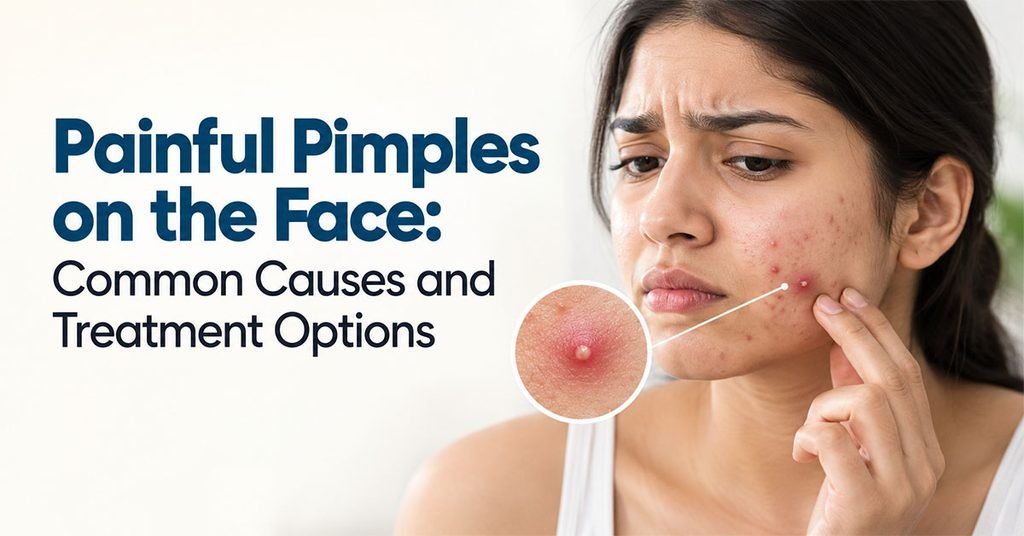
A regular whitehead sits near the surface. A painful pimple forms deeper, where a pore blocked by oil and dead skin cells becomes infected and inflamed. The body’s response sends swelling and pressure into the surrounding tissue, which is why it throbs.
Doctors group these lesions by how they look and feel:
- Papules: Small, red, tender bumps with no visible head
- Pustules: Red bumps with a white or yellow centre
- Nodules: Large, firm lumps deep in the skin that can last weeks
- Cysts: Soft, pus-filled lesions that are deep, painful and prone to scarring
Nodules and cysts belong to severe acne. They rarely settle with creams bought over the counter, and picking at them pushes the inflammation deeper.
Common Causes and Triggers
Painful acne rarely has a single cause. Several factors stack up.
- Hormonal changes: Shifts around periods, puberty, pregnancy or conditions such as PCOS increase oil production, often leading to jawline and chin breakouts
- Excess oil and clogged pores: The starting point for almost every pimple
- Bacteria: Acne-causing bacteria multiply in blocked pores and trigger inflammation
- Genetics: If parents had severe acne, the chance of it is higher
- Heavy cosmetics and hair products: Oily creams or pomades can block pores
- Stress and poor sleep: These can raise hormones that boost oil production
- Diet: High-sugar foods and some dairy may worsen acne in certain people, though the link varies
- Friction: Helmets, masks, phone screens and resting your chin on your hand
Chennai’s heat and humidity add sweat and oil, which makes regular cleansing more important.
What You Can Do at Home
Gentle habits give the skin a chance to settle, and they help any treatment work better.
- Wash twice a day with a mild cleanser, and after heavy sweating
- Use oil-free, non-comedogenic moisturisers and sunscreen
- Apply products with benzoyl peroxide, salicylic acid or adapalene as directed, starting slowly to avoid irritation
- Change pillowcases and wipe phone screens often
- Keep hair off the face, and wash it regularly
- Do not squeeze, pick or pop, which can cause scars and spread infection
- Avoid harsh scrubs and repeated cleansing, which damage the skin barrier
Give any new routine six to eight weeks before judging it. If pimples are deep, painful, leaving marks or affecting your confidence, do not wait for them to clear on their own.
When to See a Dermatologist
Professional care becomes the sensible step in these situations:
- Pimples are large, deep and painful
- Acne keeps returning in the same area
- Home products have not helped after two months
- Dark marks or pitted scars are forming
- Breakouts are linked to irregular periods or other hormonal signs
- Acne affects sleep, mood or social life
A dermatologist looks at your skin type, the kind of lesions, your medical history and any triggers. Treatment is then planned around you, not a generic routine. Early treatment is far better at preventing permanent scars than waiting.
Treatments a Dermatologist May Use
Depending on severity, a doctor may combine several approaches.
- Topical medications: Retinoids, antibiotics, and benzoyl peroxide to unclog pores and reduce bacteria
- Oral medications: Short-term antibiotics, hormonal therapy in specific situations or isotretinoin for severe or resistant acne under close supervision
- Chemical peels: Help to clear clogged pores and fade marks
- Light and laser therapies diminish inflammation and enhance the texture
- Individual lesion operations: Use for quick relief of a single big pimple
Each option has advantages and disadvantages and not all are safe during pregnancy or for some medical conditions. That is why a proper consultation matters.
Intralesional Steroid Injections for Large, Painful Lesions
When a single nodule or cyst is swollen and aching, an intralesional steroid injection can bring fast relief. The doctor injects a very small amount of diluted corticosteroid directly into the lesion with a fine needle.
- How it helps: The steroid calms inflammation at the source, so swelling and pain often reduce within a day or two, and the lump flattens over several days
- Who it suits: People with isolated, deep nodules or cysts, especially before an important event
- What to expect: A brief sting during the injection, followed by gradual flattening of the lesion
- Possible side effects: Temporary lightening of the skin, a small dent where the steroid thins the tissue or visible tiny blood vessels, which are more likely if the dose is too high or injections are repeated in the same spot
- Limits: It treats the lesion in front of you and does not prevent new ones, so it is usually combined with a regular acne routine
This is a doctor-only procedure. Doing it yourself or using unprescribed steroid creams on the face can thin the skin and worsen acne.
Erbium Glass Laser for Acne Marks and Scars
Once the pimples settle, many people are left with rough texture, shallow pits and uneven tone. Erbium glass laser is used to improve these after-effects.
- How it works: The laser delivers controlled energy into the skin, creating tiny micro-injuries that prompt the body to build fresh collagen and renew the surface
- What it helps: Shallow acne scars, rough or uneven texture, enlarged-looking pores and some dullness
- Number of sessions: Usually a series, spaced a few weeks apart, with results building gradually
- Recovery: Temporary redness, mild swelling or a feeling like sunburn, which usually settles in a few days
- Aftercare: Strict sun protection, a gentle moisturiser and avoiding picking at flaking skin
- Suitability: Active, inflamed acne is generally treated first, since laser is meant for marks and scars. Skin type and pigmentation tendency also decide settings, so a doctor must assess you before starting
Laser does not replace medical acne control. It works best after breakouts are under control, so new scars are not forming at the same time.
Preventing the Next Flare and Where to Get Help
Prevention is mostly consistency. Keep a simple routine, protect your skin from the sun, manage stress and sleep, and book follow-ups instead of stopping treatment when the skin looks better. Look for patterns like flares before your period or after eating certain foods and tell your doctor.
At Akshaya Skin Clinic, we provide dermatology and skin care in Chennai with standard therapies for acne, scars and other skin concerns.Its team assesses each patient initially and suggests options that work for their skin and goals.
Painful pimples are common, and they are treatable. The sooner the right care begins, the better the chances of keeping the skin clear and free of marks. For an assessment and a plan that fits you, consider visiting the best skin clinic in Chennai and start with a proper consultation.